HTTP Request node
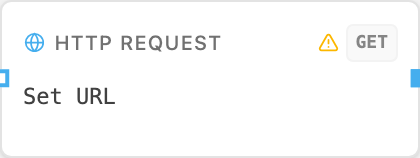
The HTTP Request node makes a real HTTP request to a URL and forwards the response downstream. It runs server-side (never in the browser), so there is no CORS limitation.
Configuration
- Method —
GET,POST,PUT,PATCHorDELETE. - URL — the full request URL. Not template-resolved; it is called literally.
- Headers —
key: valuepairs, one per line. - Body — a JSON object sent as the request body (POST/PUT/PATCH).
- Timeout — request timeout in milliseconds.
Example — POST JSON to an API
Method: POST
URL: https://api.example.com/v1/search
Headers:
  Authorization: Bearer sk-…
  Content-Type: application/json
Body: { "query": "hello" }
The response body (parsed as JSON when possible, otherwise raw text) becomes the payload for downstream nodes.
Test before you run
The inspector has a Test request button that executes the exact same request through the shared boundary, showing status, latency and response headers — so a test behaves identically to a live run.
Security
- The request runs server-side through an SSRF guard: non-http(s) protocols are always rejected, and loopback/private/link-local hosts are rejected in production.
- Secrets (like the bearer token above) belong in the node’s headers — they never leave the graph as plain environment values unless you put them there.
Notes
- Use a Web Search or MCP node for search instead of hand-rolling an HTTP search call — those understand pagination and result shapes.
Related
- Web Search — for search specifically.
- MCP — for structured external tools.