MCP node
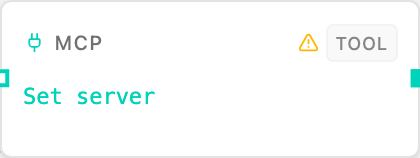
The MCP node calls a tool on a Model Context Protocol (MCP) server. MCP is the standard way to expose external tools — databases, search, internal APIs — to AI agents.
How it fits together
- You configure one or more MCP servers in the
MCP_SERVERSenvironment variable (see MCP servers). - The MCP node references a server by id and a tool by name.
- At run time, Sobmit connects to that server and invokes the tool with the arguments you provide.
Configuration
- Server — the id of the configured MCP server.
- Tool — the tool name on that server.
- Arguments — a JSON object passed to the tool, or
{ "$from": "path" }to pull arguments from the run context. - Timeout — tool-call timeout in milliseconds.
Argument templates
Arguments support two forms:
{ "query": "hello" }Or pull a value from the incoming payload:
{ "$from": "payload" }Nested {path} templates inside argument strings are resolved recursively
against the run context.
Example
An MCP server github exposes a tool list_issues. The MCP node:
Server: github
Tool: list_issues
Arguments: { "repo": "org/repo", "state": "open" }
Security
- Server details (URL, headers) never enter the graph model — the node only stores the server id and tool name.
- Header values can reference environment variables (e.g.
Bearer ${TOKEN}) so secrets stay out of the flow.
Related
- MCP servers — how to configure servers.